Nate Labadorf
-
Casting Out Demons: The Neighborhood Church in History
How has the local church confronted demonic powers? Explore casting out demons from people and places, from the ancient church… Read More
-
The Nephilim, Demons, and the Neighborhood Church
What connects the Nephilim and demons with a neighborhood church? Explore Scripture and early Christian accounts of deliverance through Christ. Read More
-
Spiritual Warfare and the Neighborhood Church
Paul puts spiritual warfare in the same letter as forgiveness, honest work, and care for others. Church history helps explain… Read More
-

What Does the Old Testament Teach About Loving Your Neighbor?
What does loving your neighbor mean in the Old Testament? Explore Leviticus 19, fair wages, gleaning, debt relief, and their… Read More
-
What Is a Neighborhood Church? A Biblical Definition
What is a neighborhood church? Explore how Scripture joins a local church’s worship, discipleship, and shared life to love for… Read More
-
Thank You, Bob Jones University, for Teaching Me Orthodoxy
Bob Jones University taught me Christian orthodoxy. Here is why I’m grateful for that inheritance without withdrawing my criticisms of… Read More
-
Did Christianity Ruin Civilization? A Christian Answer in the Spirit of Arnobius
Did Christianity destroy classical civilization? A Christian response examines temple destruction, Byzantine learning, and the arguments of Arnobius. Read More
-
Yes, Augustine Really Wrote About Werewolves. But Did He Believe in Them?
Augustine really did discuss men becoming wolves. He did not believe human flesh literally transformed, but his alternative explanation was… Read More
-
Bigfoot and Christianity: What Is Sasquatch?
Bigfoot and Christianity: Nate, David, and Wes explore Sasquatch, spiritual theories, Cain folklore, Leviathan, and Christian discernment. Read More
-
Did the Church Fathers Believe in Ghosts?
Did early Christians believe the dead could appear to the living? Augustine, Tertullian, Justin Martyr, Origen, and Lactantius give answers… Read More
-
Blood-Drinking Demons? The Closest Thing the Church Fathers Have to Vampires
The Church Fathers did not describe undead human vampires. They did, however, describe demons licking sacrificial blood, feeding on flesh-fumes,… Read More
-
Did Michael Heiser Invent the Deuteronomy 32 Worldview? What the Church Fathers Actually Said
Did Michael Heiser invent the Deuteronomy 32 worldview? Early Christians were already connecting Deuteronomy 32 with angels, Babel, supernatural rulers,… Read More
-

Church Fathers on Monsters: Ghosts, Werewolves, Witches & More
What did the Church Fathers say about monsters? Explore ghosts, werewolves, witches, vampires, haunted houses, Lilith, satyrs, and Christian victory. Read More
-
Haunted Houses Before Halloween: What Early Christians Thought Haunted a Place
Long before the modern haunted house, early Christians wrote about spirits attached to places, demons occupying homes, unexplained noises, apparitions,… Read More
-
Did Early Christians Think Demons Lived in Statues? The Ancient Version of the Haunted-Object Story
Early Christians did not think statues were inherently alive. But several Church Fathers argued that demons could attach themselves to… Read More
-
Skeletons Coming Back Together: The Creepiest Resurrection Texts in the Church Fathers
Early Christians did not imagine resurrection as the survival of a disembodied soul. Irenaeus, Tertullian, Aphrahat, and Cyril describe bones… Read More
-
Headless Men, Dog-Headed People, and the Monster Races Augustine Couldn’t Simply Dismiss
Augustine knew the ancient stories about headless men, dog-headed people, one-legged Skiapods, Pygmies, and other strange races. He did not… Read More
-
Incubi Before the Middle Ages: Demons, Sex, and the “Duses”
Long before medieval theologians developed elaborate theories about incubi and succubi, Augustine was already discussing reports of spirits sexually assaulting… Read More
-
Could Demons Turn You Into an Animal? Augustine’s Theory of Supernatural Shapeshifting
Augustine did not believe demons could literally turn a human body into a wolf, horse, or other animal. His alternative… Read More
-
Shadow People? Origen and the “Apparitions of Shadowy Spirits”
Did early Christians believe in something resembling modern “shadow people”? Origen describes shadowy apparitions near tombs, while Athanasius, John Cassian,… Read More
-
Lilith, Lamia, Sirens, and the Night Monsters of Early Christian Interpretation
Isaiah once sounded considerably stranger to Greek and Latin Christians than it does in many modern Bibles. Jerome found Lilith,… Read More
-
Satyrs, Fauns, Incubi, and the Monsters Christians Thought Lived in the Wilderness
Early Christian writers occasionally describe creatures that sound as if they wandered out of classical mythology. Jerome reports a goat-footed… Read More
-
Mummies? Embalming, Incorrupt Bodies, and the Christian Dead
Early Christians buried their dead, gathered martyrs’ bones, reported bodies preserved from decay, and sometimes compared the remains of saints… Read More
-
What Did the Church Fathers Actually Think Monsters Were?
Early Christians did not have one explanation for monsters. Depending on the report, a strange creature might be a fable,… Read More
-
Zombies Before Zombies? When Early Christians Said the Dead Came Back to Life
Early Christians sometimes claimed that dead people had returned to life. Irenaeus said some remained alive for years, Augustine recorded… Read More
-
The Return of Ancient Gods: How Spiritual Powers Shape Modern Culture
Explore the return of ancient gods through Scripture, church history, and Christ’s victory over spiritual powers shaping modern culture. Read More
-
Accepting the Providence of God: Calvin, the Early Church, and the Freedom to Say, “Your Will Be Done”
What does it mean to accept God’s providence without making God the author of evil? Scripture, Calvin, and the pre-Augustinian… Read More
-
Granted to Believe, Granted to Suffer
Philippians 1:29 says that God grants Christians not only the opportunity to believe in Christ but also to suffer for… Read More
-
Trusting God When You Cannot Control Your Life
I am responsible for my life without being in control of it. Scripture gives us a way to hold together… Read More
-
If the Stars Don’t Determine You, Does God? Romans 9 and Free Will
Romans 9 and Ephesians 1 are often treated as proof that God determines each person’s eternal destiny before birth. Read… Read More
-
The Stars Are Not Your Oracle: What the Bible Says About Astrology
The Biblical case against astrology goes much deeper than a debate about fate and free will. Scripture distinguishes the heavens… Read More
-
Your Birth Chart Is Not Your Destiny: Eusebius on Astrology and Free Will
Ancient Christians did not reject astrology because they thought the heavens were meaningless. Eusebius, Bardaisan, and Origen argued instead that… Read More
-
Do Spells Really Summon Spirits? Eusebius on Magic, Images, and Ritual Power
Did early Christians think spells could actually summon spirits? Eusebius preserves pagan arguments about magical names, images, ritual objects, and… Read More
-
Would Eusebius Call the Gods of Modern Paganism Demons?
Eusebius did not think the gods worshiped throughout the pagan world were simply imaginary. He argued that many were real… Read More
-
Should Christians Worship the Divine Council? Arnobius Against Paganism
Does the Bible’s divine council mean Christians should worship other gods? Arnobius, Psalm 82, Paul, and Revelation give a clear… Read More
-
Was Christianity Copied from Paganism? Eusebius Reversed the Charge
The claim that Christianity copied paganism assumes that Christian doctrine moved from Greece into the church. Eusebius of Caesarea argued… Read More
-
Can Christians Accept Evolution? What Eusebius Can Tell Us
Christians were arguing against naturalistic accounts of origins long before Darwin. Eusebius preserved Christian attacks on eternal matter, atomism, chance,… Read More
-
Did Genesis Borrow from Pagan Creation Myths? Eusebius Read Them Side by Side
Long before modern scholars compared Genesis with pagan creation myths, Eusebius placed Phoenician, Egyptian, and Greek accounts beside the Hebrew… Read More
-
The Christian Bishop Who Saved the Pagan Books He Wanted to Defeat
Eusebius wanted pagan writers to testify against pagan religion and philosophy. His argument was openly Christian and often severe, but… Read More
-
Baal of Peor: Covenant Treason, Divine Council
Baal of Peor reveals how sexual sin, idolatry, and rival spiritual powers joined in Israel’s covenant betrayal. Explore the biblical… Read More
-
The Book of Enoch Is Important Precisely Because It Isn’t Scripture
Christians often treat the Book of Enoch as either suppressed Scripture or useless apocrypha. Both approaches miss what makes the… Read More
-
Fallen Angels Taught Makeup? What the Church Fathers Actually Learned From Enoch
Early Christians did more with the Book of Enoch than speculate about giants. They used its Watcher story to explain… Read More
-
Tertullian Called the Book of Enoch Scripture. Why Didn’t the Church Follow Him?
Tertullian did more than quote the Book of Enoch. He called it Scripture, defended its inspiration, answered objections to its… Read More
-
Jude Quotes Enoch. Does That Make the Book of Enoch Scripture?
Jude does not merely sound like the Book of Enoch. He names Enoch, calls his words prophecy, and closely quotes… Read More
-
When Did Christians Stop Believing the “Sons of God” Were Fallen Angels?
Many early Christians read Genesis 6’s “sons of God” as heavenly beings who fell through sexual rebellion. By the fifth… Read More
-
Who Removed the Book of Enoch From the Bible? Nobody. Here’s What Actually Happened
The Book of Enoch was ancient, influential, quoted by Jude, and even treated as Scripture by some early Christians. So… Read More
-
Some Early Christians Really Did Treat Enoch as Scripture. We Should Stop Pretending They Didn’t.
Some early Christians did more than merely read Enoch. Tertullian called it Scripture, Barnabas and Clement used Enochic material positively,… Read More
-
Calling Evil Good—and Being Wise in Your Own Eyes: How a Society Loses Its Moral Judgment
Isaiah condemns those who call evil good and those who are wise in their own eyes. Read together, Isaiah 5:20–21… Read More
-
Isaiah Was Not Condemning Wine. He Was Condemning a People Who Drank Until They Forgot God
Isaiah’s warning against drinkers is often reduced to a rule about alcohol. But Isaiah 5:11–13 targets something deeper: people whose… Read More
-
“Let Him Hurry”: The Strange Sin of Demanding God’s Justice
In Isaiah 5:18–19, Judah demands that the Holy One of Israel hurry his work of justice. The problem is that… Read More
-
“House to House, Field to Field”: Isaiah, the Jubilee, and Land That Was Legal but Unjust
Isaiah 5 condemns wealthy landowners who accumulate houses and fields until everyone else is squeezed out. The Jubilee reveals why… Read More
-
Isaiah’s Vineyard Song Is Actually a Courtroom Trap: Reading Isaiah 5:1–24 as a Lawsuit
Isaiah’s vineyard song begins like poetry about a disappointed farmer. Then the owner says, “Judge between me and my vineyard.”… Read More
-
Was Biblical Law Really a “Law Code”? How Common Law Changes the Way We Read the Torah
Modern readers often approach Exodus, Leviticus, and Deuteronomy as if they were ancient statute books. But the Torah may operate… Read More
-
Second Coming of Saturn: A Review
Explore the Second Coming of Saturn through Scripture, ancient myth, the Watchers, and Christian discernment in this balanced theological review. Read More
-
Holy Oil in the Early Church: Healing, Exorcism, and the Fight Against Demons
How did Christians use holy oil in the early church? This article explores healing, baptism, exorcism, and the Church Fathers’… Read More
-
What Is Holy Anointing Oil in the Bible?
Oil appears throughout Scripture with priests, kings, Jesus, and the sick. But these passages are not all using oil in… Read More
-
Whitefoord Smith: South Carolina’s Forgotten Theologian
Meet Whitefoord Smith, the South Carolina Methodist preacher whose sermons joined providence, suffering, politics, and moral failure. Read More
-
When We Stare at Evil: How Researching BJU Racism Twisted my Soul
Evil has a way of reproducing itself through the people who hate it. This is a personal reflection on anger,… Read More
-
Wrestling with My BJU Heritage
I grew up a Fundamentalist of Fundamentalists. I was born at Barge Memorial Hospital on the campus of Bob Jones… Read More
-
Nehemiah 13: Why Reform Is Not Enough
Nehemiah 13 gives the book an uncomfortable ending. Jerusalem is rebuilt, but old compromises return. The chapter shows why genuine… Read More
-

Losing God in the Dark Night? Why God Feels Absent
The dark night of the soul may feel like God’s absence, yet St. John of the Cross describes it as… Read More
-
Nehemiah 12: When the Wall Becomes a Place of Praise
Nehemiah 12 transforms Jerusalem’s wall from a symbol of disgrace into a place of praise. The dedication joins memory, purification,… Read More
-
Nehemiah 11: Why the Holy City Needed People
Nehemiah 11 asks what happens after the wall is finished and the covenant is renewed. Jerusalem still needs people willing… Read More
-
Nehemiah 10: When Repentance Becomes a Way of Life
Nehemiah 10 moves from confession to concrete covenant commitments. The restored community must now bring repentance into money, marriage, Sabbath,… Read More
-
Nehemiah 9: Remembered Sin and Remembered Mercy
Nehemiah 9 tells Israel’s history as confession. The people remember their repeated rebellion, but they also remember the faithful God… Read More
-
Nehemiah 8: Why Restoration Needs the Word of God
Nehemiah 8 shows why rebuilding Jerusalem was not enough. God’s restored people needed Scripture they could hear, understand, obey, and… Read More
-
Nehemiah 7: A Finished Wall Still Needs a People
Nehemiah 7 begins after Jerusalem’s wall has been completed, but the city is still nearly empty. The chapter shows why… Read More
-
Exodus Sacred Geography: How Yahweh Conquers Chaos and Claims His People
The Exodus does not end when Israel leaves Egypt. At the sea, in the wilderness, and on the road to… Read More
-
Nehemiah 6: Discernment When Opposition Changes Its Tactics
Nehemiah 6 shows what happens when obvious opposition stops working. Sanballat turns to distraction, rumor, and religious manipulation, forcing Nehemiah… Read More
-
Nehemiah 5: The Wall Cannot Protect You From Injustice
Nehemiah 5 reveals a crisis inside Jerusalem. The wall can stop an enemy, but it cannot protect poor families from… Read More
-
Nehemiah 4: How God’s People Work Under Opposition
Nehemiah 4 shows what happens when ridicule becomes threat and fear begins to weaken a community. Nehemiah answers with prayer,… Read More
-
Nehemiah 3: God Builds a People by Giving Everyone a Place at the Wall
Nehemiah 3 looks like a list of builders, but its names reveal a theology of Christian community: different people accepting… Read More
-
Nehemiah 2: The Good Hand of God Does Not Replace a Good Plan
Nehemiah 2 refuses to separate providence from planning. God opens the way, but Nehemiah still prepares, investigates, persuades, and invites… Read More
-
Dark Night of the Soul and Loving God?
Can love for God grow while the mind remains confused? Explore Saint John of the Cross, Mary Magdalene, Psalms 42–43,… Read More
-
Before Nehemiah Built a Wall, He Learned to Weep
Before Nehemiah planned, organized, or rebuilt Jerusalem’s wall, he sat down and wept. Nehemiah 1 shows why Christian restoration must… Read More
-
Christian Anti-Communism and Divine Eros: When Lesser Loves Bear the Weight of Christ
A study of BJU’s Cold War anti-communism asks when love of freedom, America, and Christian institutions became fused with love… Read More
-
Divine Eros and Competing Loves: When Losing Something Good Feels Like Losing Christ
What happens when a good Christian institution, tradition, or community becomes so joined to Christ that losing it feels like… Read More
-

E. Stanley Jones Biography: The Missionary Who Put Christ on the Indian Road
Explore E. Stanley Jones’s life, mission in India, friendship with Gandhi, Christian ashrams, and Kingdom theology that reshaped modern missions. Read More
-

Fountains of the Deep: What Caused Noah’s Flood?
What were the fountains of the deep? See how Genesis describes Noah’s Flood beginning through ruptured seas, skies, tectonics, and… Read More
-
Territorial Spirits at Babel: Did Divine Conflict Drive the Nations Apart?
Explore how territorial spirits at Babel—drawn from Deuteronomy 32:8-9, Psalm 82, and Daniel 10—may have accelerated humanity’s dispersal. Read More
-
Ten Plagues Defeated Egypt’s Gods: Exodus Explained
The Ten Plagues were more than natural disasters or political pressure against Pharaoh. Exodus presents them as supernatural judgments through… Read More
-
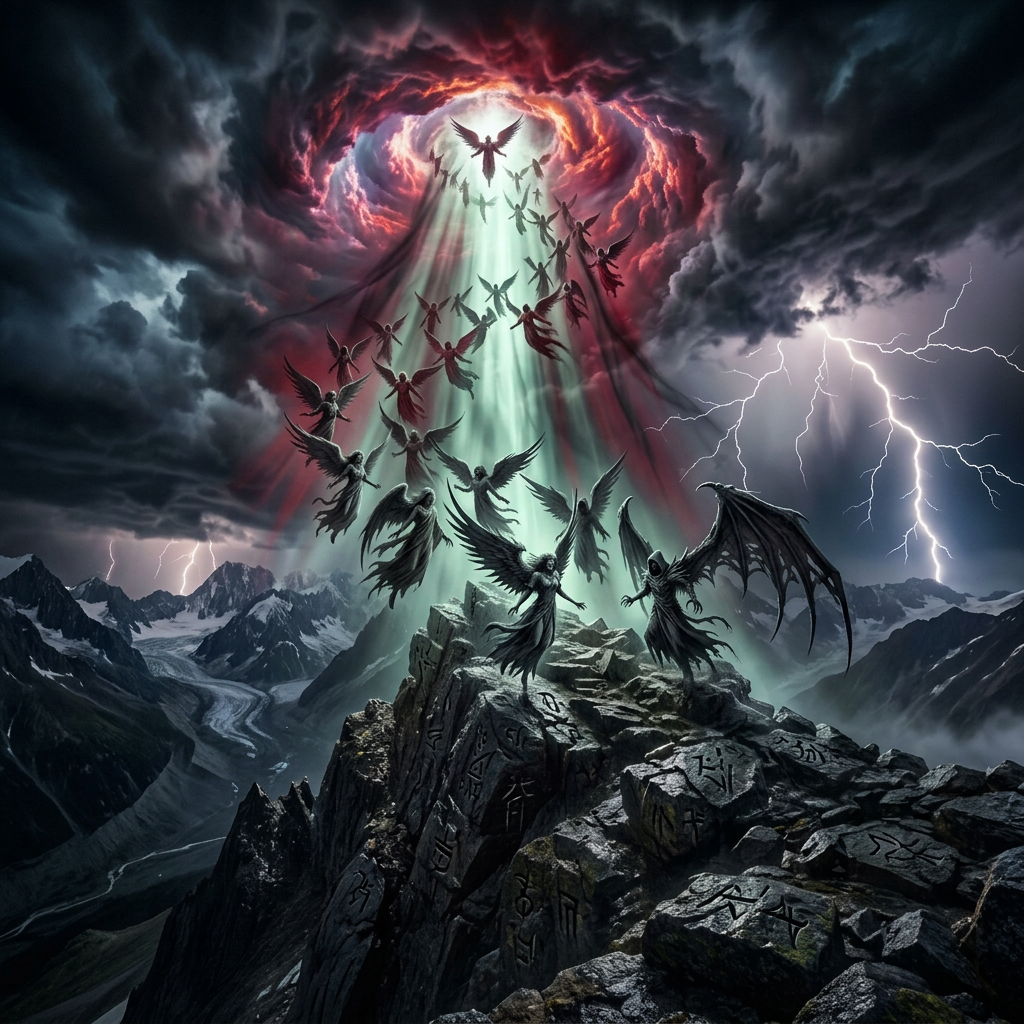
Who Were the Watchers in Genesis 6? Nephilim, Hermon, and the Second Fall
The Watchers in Genesis 6 crossed the line between heaven and earth. Their rebellion produced the Nephilim and spread forbidden… Read More
-

Cain’s City in the Bible: Opposite Eden Explained
Why did the Bible’s first murderer build its first city? Cain’s city gathered food, music, metalwork, power, and violence into… Read More
-
AI and Theology: Why Knowing About God Is Not Knowing God
AI and theology now meet in classrooms, churches, books, and online conversations. Artificial intelligence can explain doctrines, compare Bible passages,… Read More
-
Career Spells Are Rising: How Should Christians Respond?
Career spells have become a visible part of the modern job search. People now buy rituals for interviews, promotions, better… Read More
-
AI in Pastoral Ministry: A Biblical Guide to Wise Use
Explore a biblical framework for AI in pastoral ministry, including wise uses, spiritual limits, truthfulness, privacy, and accountability. Read More
-
Pastors Using AI: What Church History Teaches About Authorship and Responsibility
Pastors using AI can draft sermons responsibly when they understand the message, verify its claims, serve their congregation, and own… Read More
-
Dark Night of the Soul and Psalm 63: Love in the Darkness
Explore the dark night of the soul and Psalm 63, where spiritual thirst, supernatural love, and God’s hidden presence transform… Read More
-

Supernatural Calling of God: Becoming a Handyman
The supernatural calling of God does not always lead to a platform. Sometimes God uses hidden work, correction, suffering, and… Read More
-
Sleep Paralysis, Sauron on the Porch, and the God Who Wouldn’t Let Go
A personal account of a lifetime of unexplainable encounters — from a childhood basement in the South Carolina countryside to… Read More
-
Supernatural Pre-Flood World: Watchers, Giants, and Noah
Explore the supernatural pre-Flood world of Genesis, where the Watchers rebelled, the Nephilim spread violence, and Noah trusted God. Read More
-
The Genesis Gap Theory: Angels, Ancient Myths, and What Genesis 1 Actually Says
The Genesis gap theory claims a hidden catastrophe fills Genesis 1:2. See what the Hebrew grammar and ancient parallels actually… Read More
-
Do Patriarchal Blessings in Genesis Really Shape the Future?
Patriarchal blessings in Genesis were more than predictions. Discover how Isaac and Jacob’s words shaped Israel’s future under God’s authority. Read More
-
One God, Many Elohim: Does the Divine Council Make Christianity Polytheistic?
Explore divine council and polytheism claims: what Elohim really means, and why Yahweh’s uniqueness keeps biblical faith monotheistic. Read More
-
How the Old Testament Portrays Rival Gods and Spiritual Powers
Explore the supernatural worldview of Scripture through Naaman, Dagon, Daniel 10, Assyria, and Christ’s victory over the powers. Read More
-
Who Were the Nephilim, and What Did Genesis Say?
Who were the Nephilim and the Watchers? A fair look at Genesis 6, 1 Enoch, and how to explore giants… Read More
-
What Is the Divine Council and the Unseen Realm?
“Unseen realm” content is everywhere on Christian YouTube right now. Here’s the plain, text-first version — what Psalm 82, Psalm… Read More
-
Are UFOs Demons? A Christian Response
Are UFOs demons, extraterrestrials, or something stranger? Explore what Scripture says about spiritual deception and a crowded cosmos. Read More
-
Safe Deliverance Ministry: A Pastoral Protocol
Learn how churches can practice safe deliverance ministry through pastoral discernment, informed consent, clinical care, accountability, and prayer. Read More
-
Spiritual Warfare and Mental Health?
Christians do not have to choose between prayer and professional mental health care. A two-lane framework allows pastors and clinicians… Read More