
Episode Summary
Three guys, three mugs, and one of the most wild and fascinating corners of American church history. This episode dives into the Fire Baptized Holiness Movement — a late nineteenth century revival that preached not just salvation, not just sanctification, but a third blessing: a baptism of fire. Started by a former Nebraska lawyer named Benjamin Hardin Irwin, the movement spread across eight states and two Canadian provinces in just a few years, made its headquarters in Greenville, South Carolina, and planted seeds that eventually grew into global Pentecostalism. Part 1 of 2.
What We Cover
Who Was B.H. Irwin? Benjamin Hardin Irwin was a former lawyer turned holiness preacher — a combination that, as the guys note, is more common in this era than you’d think (Charles Finney being the obvious example). After professing entire sanctification in 1891, Irwin became convinced Scripture promised something more. In October 1895 he testified to receiving a visionary “baptism of fire” and began promoting what he called a third blessing — over and above justification and entire sanctification. His rhetorical training made him a persuasive and organizing force, spreading the movement fast across the American South and Midwest.
The Third Blessing — What Did They Actually Teach? The theological center of the movement was a three-stage sequence of grace:
- Justification (first blessing)
- Entire sanctification (second blessing)
- Baptism with the Holy Ghost and fire — God’s “dynamite”
Key theologian Edward Kelly tried to avoid the “third blessing” label by collapsing the fire into a two-stage second blessing (cleansing, then filling), pointing to Psalms and Jeremiah as exegetical support. But other voices in the movement just called it a third blessing outright, and the journal allowed both. The group’s stated motto: experience is the supreme test of everything.
The Dynamite Metaphor Nobel invented dynamite in 1867. By the 1890s it was reshaping mining, construction, and warfare — the most powerful force ordinary people could picture. Calling the Spirit’s work “dynamite” was the movement’s way of meeting people where their imagination lived, doing what Paul did with athletic metaphors. The guys note it also dates the movement pretty clearly.
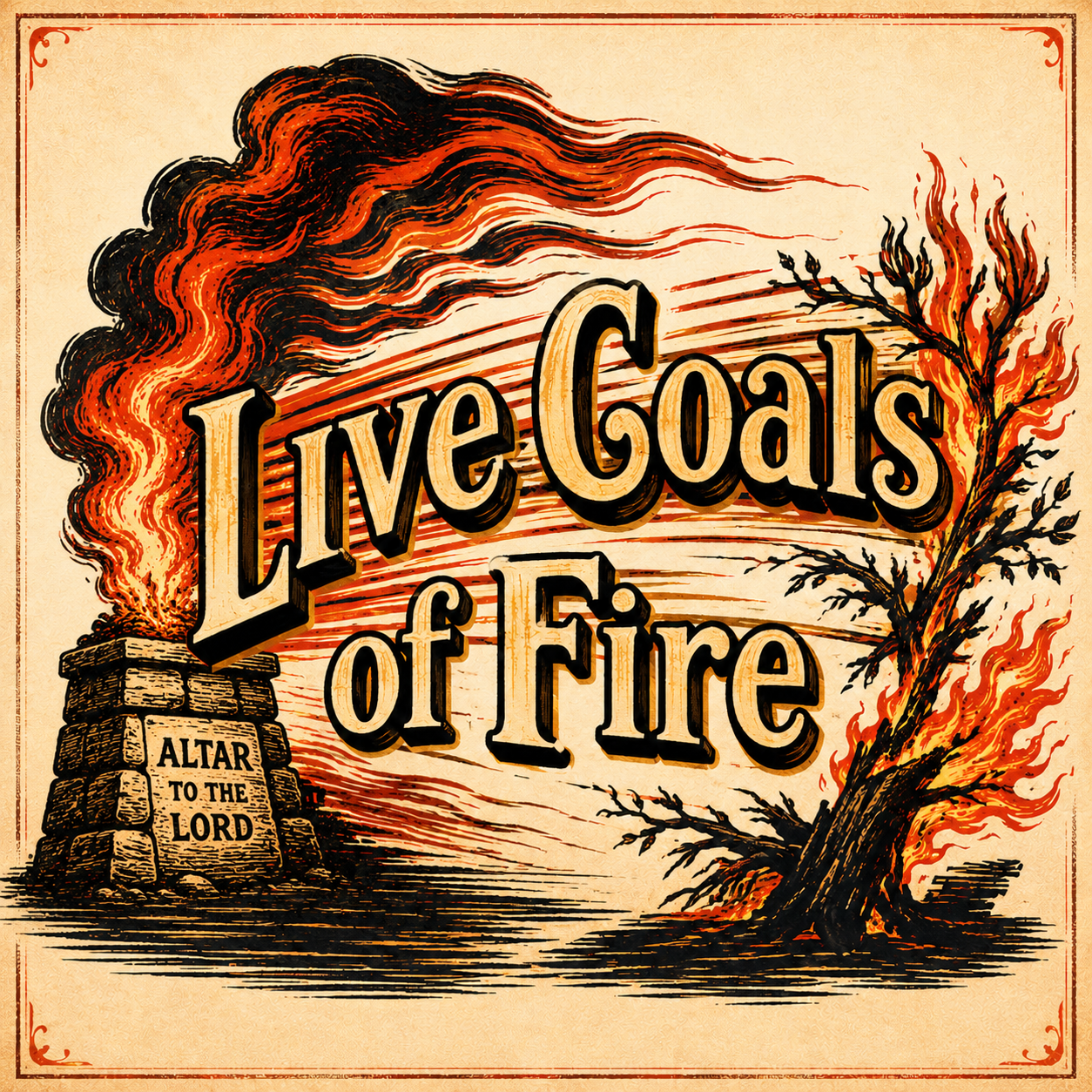
The Journal: Live Coals of Fire Irwin launched an official publication that ran from 1899 to 1900 — described as prioritizing personal testimonies and lived experience over doctrinal precision. It functioned like the podcast of its day, fanning the flames across the movement. Irwin was elected General Overseer for life, a red flag the guys spend some time unpacking.
How They Drew the Lines The movement had sharp boundary-marking instincts:
- Other churches labeled as “strange fire” (Leviticus 10 — Nadab and Abihu)
- Methodists, Quakers, and Campbellites called daughters of Babylon; staying in them counted as spiritual adultery
- Lodges like the Masons condemned as compromised allegiances
- Any criticism from outside reinterpreted as Satanic opposition — making the frame unfalsifiable
- Expulsions from other churches read as God’s seal of approval
Wes names the dynamic: when opposition can never just be honest disagreement, you’ve closed off the ability to self-correct.
Healing and the Anti-Medicine Stance Divine healing was central. Testimonies of miraculous cures filled the journal. But the movement went further — condemning medicine and drugs as sorcery, citing pharmakeia in Revelation 22:15. Wes traces a direct line from this into later faith healing movements that caused real harm to families. The guys agree the exegetical move is a stretch: the Greek word is closer to poison craft or sorcery than modern pharmacy.
Apocalyptic Urgency and Premillennialism The whole movement ran on eschatological heat. Jesus was coming back soon. Lamps had to be lit. The fire was preparation for the bridegroom’s return. As Wes points out, premillennial urgency can be energizing but also makes sustainability feel beside the point — why build seminaries if the Lord is coming any day?
The Irony of Institution-Building Despite fierce anti-institutional rhetoric, the movement:
- Formed a national association with formal governance
- Started the School of the Prophets in Tennessee (requiring teachers to be “saved, sanctified, fire-baptized, and dynamited“)
- Established ordination and church discipline
The guys note this is a pattern — anti-institutional movements almost always build institutions. They just call theirs different.
Where It All Led The Fire Baptized Holiness Association eventually merged into what became the International Pentecostal Holiness Church — now over 1.7 million members and one of the larger Protestant denominations in the world. The headquarters of one branch, the Fire Baptized Holiness Church of God of the Americas, is right in Greenville, SC. The full name of the Greenville church: Mount Zion Fire Baptized Holiness Church of God of the Americas. Nate’s personal favorite church name in the area.
The Bigger Question the Episode Keeps Circling
Where’s the line between worship that’s culturally unfamiliar and worship that’s actually off? The guys don’t fully resolve it, but they agree: look at the fruit, hold the framework accountable to Scripture, and stay humble about what your own cultural background is doing to your reaction.
Resources
- Nate’s seminary paper on the Fire Baptized Holiness Movement (with full bibliography) — linked in show notes
- Live Coals of Fire journal archives available at newspapers.com
- Merch store and fresh ground coffee: FreshGroundTheology.com
Next Episode Part 2 of the Fire Baptized Holiness Movement — the fall of Irwin, the merger, the Azusa Street connections, and the long shadow this movement cast on global Pentecostalism.
Follow on YouTube · Spotify · Apple Podcasts Drop a note if you want to go deeper on Fuller, Azusa, or the holiness-Pentecostal debate — the rabbit holes are real.
Leave a Reply