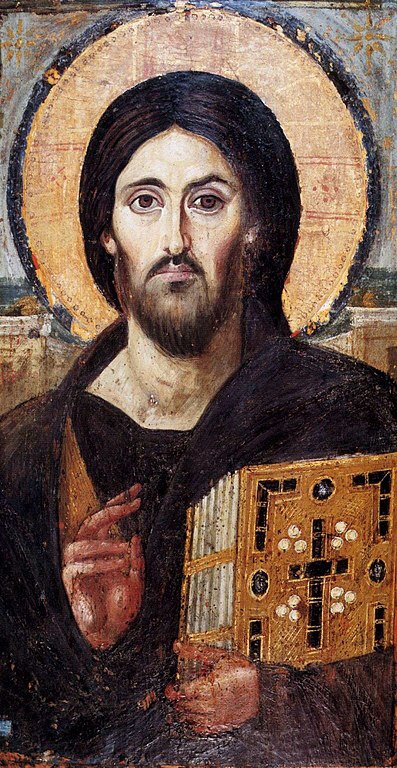
To announce oneself as a king is one thing. To prove it—by lineage, by authority, and by action—is another altogether. In the ancient world, kingship was not merely about birthright; it was about vocation, validation, and victory. The New Testament’s portrait of Jesus Christ is not satisfied with mere titles or public sentiment. It goes deeper—into genealogy scrolls and prophetic blueprints, into temple walls and battlefield visions. It asks, again and again: Is this man truly the king we were promised?
And the answer it gives is unflinching.
A Son of David, but Something More
The Gospels do not hesitate to tether Jesus to David. Matthew opens his account with a genealogical overture: “An account of the genealogy of Jesus the Messiah, the son of David, the son of Abraham” (Matt. 1:1). With surgical precision, he walks through generations, not only to establish a lineage but to crown it. Jesus is not just any son of David—he is the Son promised in 2 Samuel 7, the heir whose throne would endure forever.
Luke, too, draws the connection. When the angel Gabriel appears to Mary, he declares that her son “will be great, and will be called the Son of the Most High, and the Lord God will give to him the throne of his ancestor David” (Luke 1:32). The Davidic line is not incidental; it is essential.
But Jesus does more than wear David’s crown—he redefines it. When cornered by the Pharisees, he asks a question they cannot answer: “How can David by the Spirit call him Lord?” (Matt. 22:43). Quoting Psalm 110, Jesus gently destabilizes the idea that the Messiah would be merely David’s biological descendant. If David calls him “Lord,” then the Messiah must be someone greater, someone divine.
And so, Jesus becomes the paradox: the king who descends from David, yet precedes him in authority and nature. The kingdom he inherits is both ancient and altogether new.
The Builder of God’s House
According to the Davidic covenant, the promised king would not only sit on a throne—he would build a house for the Lord (2 Sam. 7:13). Solomon, David’s immediate heir, did just that. But the prophets hinted at another temple, one not made by hands.
Jesus makes this claim with a curious statement to Peter after his confession of faith: “You are Peter, and on this rock I will build my church” (Matt. 16:18). The church, later described as “a temple of the Holy Spirit” (1 Cor. 3:16), becomes the living architecture of Christ’s kingship. The kingdom he builds is not bounded by limestone and cedar but by hearts and souls drawn together under his authority.
Yet Jesus’ claim is not merely spiritual. In John’s Gospel, he points to the temple and says, “Destroy this temple, and in three days I will raise it up” (John 2:19). His own body becomes the sanctuary of God’s presence, the nexus of heaven and earth. When the synoptics recount this statement, they use the word oikodomeō—to build—linking back to the same verb Jesus uses when promising to build his church (cf. Matt. 16:18, Mark 14:58). In this multilayered claim, Jesus fulfills the role of temple-builder on every level: spiritual, physical, and eschatological.
Still, the promise in 2 Samuel 7 beckons a fuller completion. Ezekiel’s vision of a restored temple (Ezek. 40–48), detailed in cubits and courts, suggests a physical reality yet to come. In the same breath that he declares judgment and hope, the prophet speaks of a literal house where God will dwell among his people once more. And the one to build it? None other than the rightful heir—the Son of David, the Son of God.
A King Who Speaks with Power
Long before his crown of thorns or the triumphant palm branches, Jesus commanded attention. The crowds, Luke tells us, “were astounded at his teaching, because he spoke with authority” (Luke 4:32). This was no mere charisma. His words carried weight—the kind that silences scribes and makes demons tremble.
The title “Holy One of God” (Mark 1:24) may sound cryptic to modern ears, but in the first-century Jewish context, it screamed legitimacy. It marked Jesus as one commissioned directly by God, bearing his authority like a signet ring. And when Jesus speaks—whether to winds, sickness, or spirits—his words do not return void.
But his authority extends beyond the natural world. He forgives sins. He calms storms. He heals the untouchable. He speaks of angels and judgment, of thrones and kingdoms. “The Son of Man has authority on earth to forgive sins” (Matt. 9:6), he declares, invoking the vision of Daniel 7, where one like a son of man receives dominion and glory from the Ancient of Days.
Jesus is not just another prophet with a podium. He is the King of Glory, stepping into his inheritance one miracle at a time.
Crowned in Resurrection
If his miracles established his authority, the resurrection ratified it. Paul is unambiguous: Jesus “was declared to be Son of God with power according to the spirit of holiness by resurrection from the dead” (Rom. 1:4). This does not mean Jesus became God’s Son only after rising from the grave. Rather, the resurrection unveiled a deeper dimension of his sonship—a victorious, enthroned sonship marked by power and permanence.
From that moment forward, the royal language thickens. “All authority in heaven and on earth has been given to me,” Jesus tells his disciples (Matt. 28:18). The Great Commission is not a mere invitation—it is a decree issued by a sovereign king.
And that authority continues to expand. Jesus sends his disciples out like royal ambassadors, casting out demons, healing the sick, and proclaiming the kingdom. Even the eschaton is framed in regal terms: “Then they will see ‘the Son of Man coming in clouds’ with great power and glory” (Mark 13:26).
The Shepherd-King and the Iron Scepter
Kings rule. Kings judge. But the greatest kings also protect.
Jesus identifies himself as the Good Shepherd—not only in tenderness, but in kingship. He lays down his life for the sheep (John 10:11), but he also guards them with rod and staff. In Revelation, this dual image reaches its crescendo: “He will shepherd them with a rod of iron” (Rev. 19:15). The rod is not merely for comfort—it is also for conquest.
The shepherd’s crook becomes a scepter, and the cross becomes a throne. From this position, Jesus judges the nations, not arbitrarily, but with divine justice. “He will separate people one from another as a shepherd separates the sheep from the goats” (Matt. 25:32). Judgment and mercy, wrath and tenderness—they coexist in the king whose robe is dipped in blood and whose name is called “The Word of God” (Rev. 19:13).
The King’s Commands
It is no surprise, then, that the Sermon on the Mount functions like royal legislation. “You have heard it said,” Jesus begins, echoing Sinai and Moses, “but I say to you…” (Matt. 5:21–22). He is not abolishing the law; he is fulfilling it—deepening it, internalizing it, radicalizing it.
This is the ethic of a kingdom not of this world, but certainly for it.
And yet, the Sermon is not mere idealism. It demands obedience. “Be perfect, therefore, as your heavenly Father is perfect” (Matt. 5:48). These are not suggestions; they are commands issued by a king whose throne is righteousness and whose reign is eternal.
Kingdom Come, Kingdom Spread
The ramifications of Christ’s kingship are not abstract—they are the very fabric of Christian discipleship. He is not simply a figure to admire; he is a ruler to obey. His Great Commission is the kingdom’s expansion plan: “Go therefore and make disciples of all nations… teaching them to obey everything that I have commanded you” (Matt. 28:19–20).
Every disciple is both subject and ambassador, both follower and representative. And every act of obedience—whether baptism, teaching, or sacrificial love—is a confession: Christ is King.
The Final Word
The claim of Jesus is not a whisper. It is a royal proclamation that echoes across history. He fulfills the covenant. He builds the temple. He speaks with divine authority. He conquers death. He governs his church and judges the world. And one day—perhaps soon—he will return, not in hiddenness but in unveiled glory.
Until then, the church lives in loyalty. We follow not a metaphor but a monarch. And in that allegiance, we find both our joy and our crown.
 Fresh Ground Theology
Leave a comment