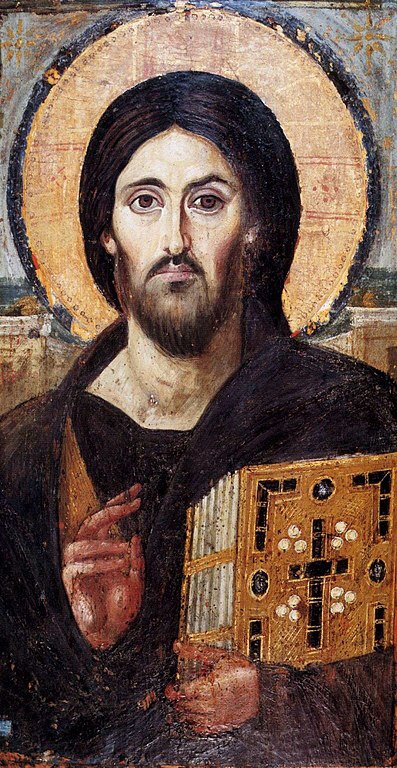
He never wore a coronet. Never sat on a jeweled throne or ordered legions into battle. His entourage was more dust than diadem, more sandals than scepters. And yet, from the first cries of recognition to the final cry on Golgotha, Jesus of Nazareth moved through Roman-occupied Judea bearing the weight of a crown the world could neither see nor understand.
The New Testament does not so much introduce Jesus as king as unveil him as such—bit by bit, moment by moment, like dawn cresting the edge of the known world. There is no singular declaration, no earthly enthronement. His kingship is glimpsed in parable and protest, in prophecy and paradox, until it erupts in full through blood, glory, and ascension.
The question is not whether Jesus claimed to be king. The question is whether we know what kind of king he claimed to be.
A Kingdom from the Clouds
His favorite self-designation was cryptic but loaded: the Son of Man. For modern readers, the phrase can seem evasive, even humble. But for first-century hearers steeped in the visions of Daniel, it sounded like thunder.
“In the visions of the night,” Daniel writes, “I saw one like a son of man coming with the clouds of heaven. And he came to the Ancient One and was presented before him. To him was given dominion and glory and kingship, that all peoples, nations, and languages should serve him” (Dan. 7:13–14). In the architecture of apocalyptic literature, this is no mere figure. He is the cosmic sovereign, the king of an everlasting dominion.
Jesus adopts this title and embeds it in the marrow of his teaching. In Matthew’s Gospel, he tells a parable in which “the Son of Man will send his angels, and they will collect out of his kingdom all causes of sin and all evildoers” (Matt. 13:41). The kingdom is his. The judgment is his. The throne, we are told later, will be his as well: “When the Son of Man comes in his glory, and all the angels with him, then he will sit on the throne of his glory” (Matt. 25:31). This is not metaphor. It is monarchy.
In another place, he promises his followers a share in the administration of this reign. “You who have followed me will also sit on twelve thrones, judging the twelve tribes of Israel” (Matt. 19:28). The imagery is unmistakably regal. The implication unmistakably dangerous.
The Trial of a King
It is in his trial before Pilate, however, that Jesus’s royal claims become most explicit—and most deadly.
Each of the Gospels preserves the moment. “Are you the King of the Jews?” the Roman governor asks. And Jesus, in his characteristic paradox, replies, “You say so” (Matt. 27:11; cf. Mark 15:2; Luke 23:3; John 18:37). It is not a denial. It is a guarded affirmation, the kind of answer that veils itself until the moment it must be unveiled.
In John’s Gospel, the dialogue is even more charged. Jesus speaks not of titles but of realms: “My kingdom is not from this world” (John 18:36). The phrase has sparked centuries of theological speculation. Some hear in it a repudiation of earthly rule—a kingdom purely spiritual, detached from politics, empire, and flesh. But others—perhaps more attuned to the grammar of the Greek—note that ek tou kosmou toutou might better be rendered “not from this world,” rather than “not of it.” In other words, the source of the kingdom is heavenly, but its arrival is very much earthly.
This distinction matters. The kingdom Jesus proclaims is not birthed by human ambition. But neither is it a vapor. It will come with angels, judgment, and thrones. It will come “on earth as it is in heaven.”
Crowned from Birth
The royal language that frames Jesus’s ministry was not appended later by doctrinal reflection. It begins from his first appearance.
“Where is the child who has been born king of the Jews?” ask the Magi, wide-eyed and travel-worn, as they enter Jerusalem (Matt. 2:2). It is not a question. It is a disturbance. Herod understands this immediately—and orders the slaughter of children to neutralize the claim. A child born king is a rival, not a metaphor.
Later, Nathaniel—hardly the most celebrated of disciples—utters one of the most profound recognitions: “Rabbi, you are the Son of God! You are the King of Israel!” (John 1:49). The phrase “Son of God” resonates with divinity, yes, but it also hearkens back to the Davidic covenant: “I will be a father to him, and he shall be a son to me” (2 Sam. 7:14).
The crowds, too, catch the scent of royalty. After Jesus feeds five thousand with loaves and fish, they murmur among themselves: “This is indeed the prophet who is to come into the world” (John 6:14). But the text notes their next impulse: “They were about to come and take him by force to make him king” (John 6:15). Jesus slips away—not because he denies the title, but because the crown they offer is political, impatient, and premature.
Entering on a Donkey
When the time is right, Jesus does not deny his royalty. He enacts it.
As he approaches Jerusalem, he mounts a donkey—consciously fulfilling the words of Zechariah: “Rejoice greatly, O daughter Zion! … Lo, your king comes to you; triumphant and victorious is he, humble and riding on a donkey” (Zech. 9:9). The crowd—likely drawn from those who followed him through Galilee—responds with liturgical fervor: “Hosanna to the Son of David! Blessed is the one who comes in the name of the Lord!” (Matt. 21:9).
This is no accidental symbolism. He is not a teacher who stumbles into prophecy. He is a king who rides toward coronation—one crowned not with gold, but with thorns.
The Testimony of the Texts
The New Testament is not quiet about Christ’s kingship. Paul declares him “the blessed and only Sovereign, the King of kings and Lord of lords” (1 Tim. 6:15). The writer of Hebrews speaks of a Son “whose throne is forever and ever” (Heb. 1:8). Peter describes “the eternal kingdom of our Lord and Savior Jesus Christ” (2 Pet. 1:11). And the book of Revelation—unapologetically regal in tone—proclaims that “the kingdom of the world has become the kingdom of our Lord and of his Messiah, and he will reign forever and ever” (Rev. 11:15).
Here, Christ is not merely present. He is enthroned. “On his robe and on his thigh he has a name inscribed, ‘King of kings and Lord of lords’” (Rev. 19:16). And those who suffer with him, Revelation insists, will also reign with him (Rev. 20:4).
This is the kingship the early church preached—not an abstraction, but a claim that collided with every empire and ego of its age.
Kingdom Come
To say that Jesus is king is not merely to confess a theological truth. It is to destabilize every other allegiance. His is a kingdom not from this world—but it is absolutely for this world. A kingdom of justice, judgment, mercy, and peace. A kingdom that judges the empires of men and heals the wounds they leave behind.
In the end, the carpenter from Nazareth was not crowned by the crowds, nor enthroned by the state. He was lifted up on a cross—and in that lifting, exalted. He was buried—and in that burial, enthroned.
And even now, he reigns—not from the palaces of this world, but from a throne above it, awaiting the day when every eye will see, and every knee will bow.
 Fresh Ground Theology
Leave a comment