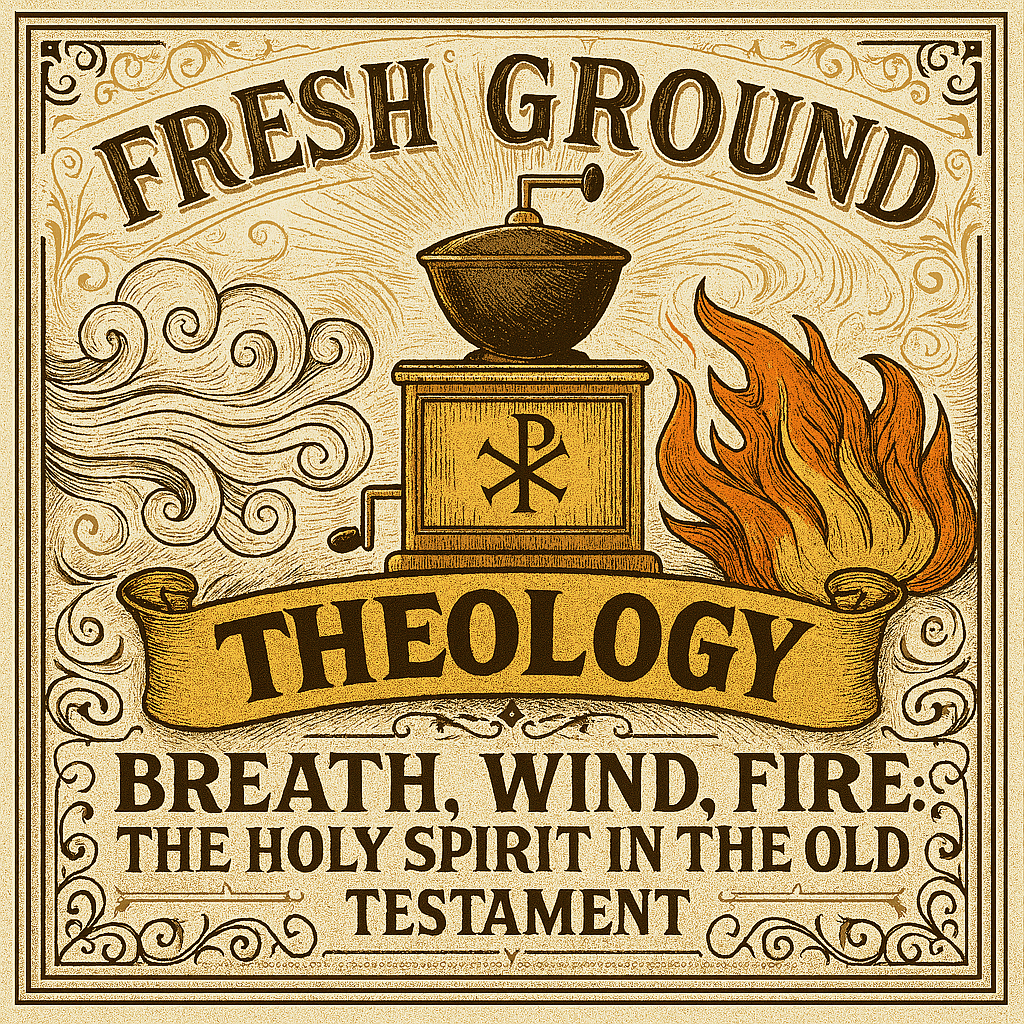
What does it mean to encounter the Spirit of God in the pages of the Old Testament? In this episode of Fresh Ground Theology, David and Nate explore the Hebrew word ruach—translated as breath, wind, or spirit—and how it reveals the dynamic, personal, and life-giving presence of God from Genesis through the Prophets.
SoFrom the Spirit hovering over the waters in Genesis 1 to empowering judges, kings, artists, and prophets, this episode traces the active role of the Holy Spirit in creation, history, and personal renewal. The hosts also explore Jewish interpretations between the testaments, the silence of the Spirit in exile, and the prophetic longing for a day when God’s Spirit would fall on all flesh.
You’ll also hear about:
- The symbolic and literal meanings of ruach
- The Spirit’s role in empowering leadership, craftsmanship, and prophetic speech
- The Spirit’s presence in the tabernacle, exile, and wilderness
- The difference between Ruach Elohim and ruach as natural force
- The evolving theology of the Holy Spirit in the Qumran community and rabbinic Judaism
- Why David prayed, “Take not your Holy Spirit from me”
Plus, David and Nate start the episode the only way they know how—by brewing coffee with intentionality and inviting you into that same slow, attentive rhythm as you meet the breath of God in Scripture.
Key Themes:
- The Spirit of God in the Hebrew Bible
- Trinitarian theology and the Old Testament
- Ruach Elohim: meaning, movement, and mystery
- Intertestamental and rabbinic views of the Holy Spirit
- The Spirit’s role in creation, prophecy, leadership, and moral renewal
Quotable Moments:
“When the Spirit shows up, things change. You can see it, feel it, hear it. The world responds.”
“Ruach is not just wind—it’s the breath that gives life, the force that empowers, and the presence that transforms.”
“David didn’t just ask for forgiveness—he begged God not to take His Spirit away.”
Resources & Further Reading:
Hoffman, Donald L.
“A Critical Examination of the Hebrew Word [ruach] as it Occurs in the Masoretic Text of the Old Testament Studied in the Light of the Septuagint.” MA thesis, Butler University, 1942.
Medhurst, W. H., Sr.
An Inquiry into the Proper Mode of Translating Ruach and Pneuma in the Chinese Version of the Scriptures. Shanghae: Mission Press, 1850.
Timoner, Rachel.
Breath of Life: God as Spirit in Judaism. Brewster, MA: Paraclete Press, 2011.
Moskala, Jiří.
“The Holy Spirit in the Hebrew Scriptures.” Journal of the Adventist Theological Society 24, no. 2 (2013): 18–58.
Tasker, David R.
“Ruach Elohim: The Holy Spirit in the Old Testament.” Ministry: International Journal for Pastors 85, no. 1 (2013): 16–19.
Danan, Julie Hilton.
The Divine Voice in Scripture: Ruah ha-Kodesh in Rabbinic Literature. PhD diss., University of Texas at Austin, 2009.
Carlson, Reed.
“Rûaḥ in the Hebrew Bible: A Survey of Past Scholarship.” Currents in Biblical Research 22, no. 2 (2024): 115–132. https://doi.org/10.1177/1476993X241234908.
Neve, Lloyd R.
The Spirit of God in the Old Testament. Tokyo: Seibunsha, 1972.
Connect & Support:
- Follow us on Spotify, Apple Podcasts, or YouTube
- Join the conversation on Facebook
- Browse Fresh Ground Theology merch (including our official coffee mug)
- Send us a message or feedback at FreshGroundTheology.com
Closing Blessing:
Each episode ends with the Lord’s Prayer and the Aaronic blessing (Numbers 6:24–26) as a moment to breathe, reflect, and remember the nearness of God’s Spirit.
 Fresh Ground Theology
Leave a comment