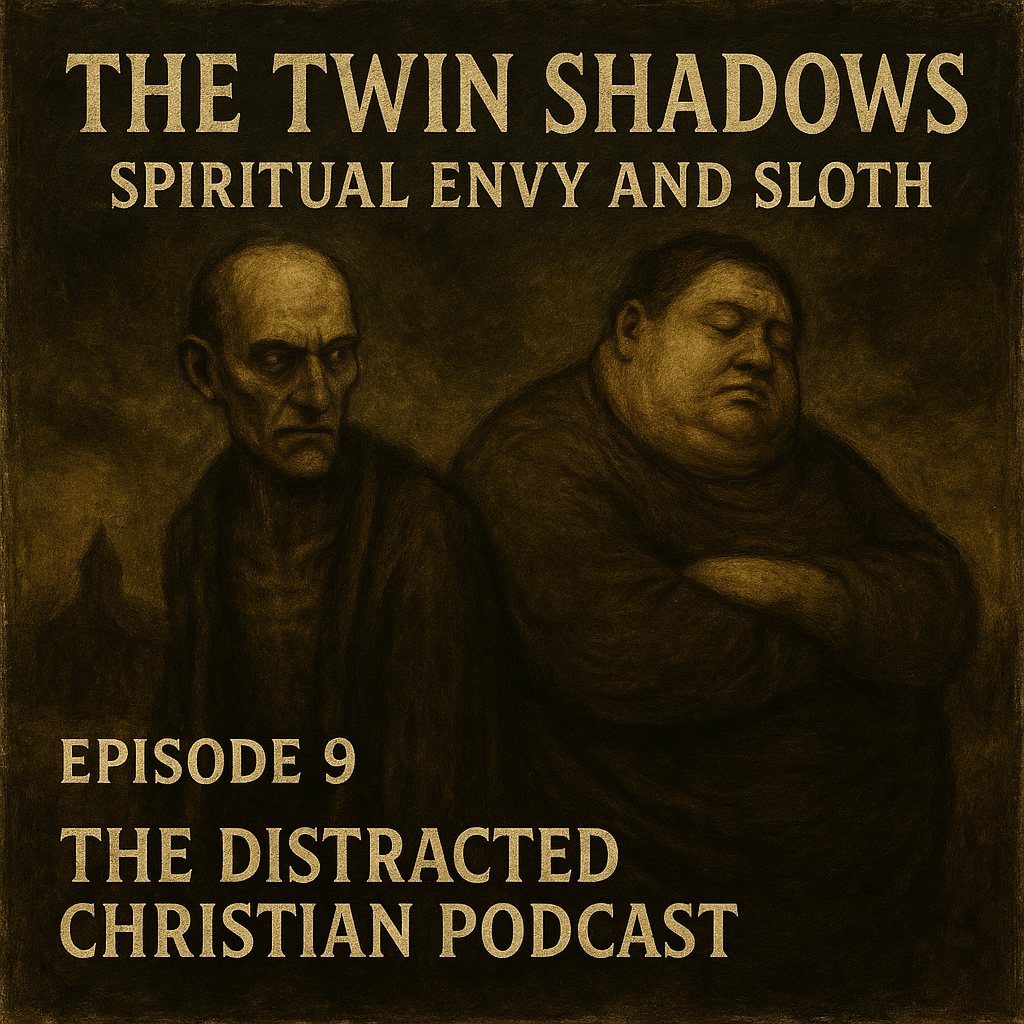
Introduction: Envy at the Edge of Eden
There’s a moment in Paradise Lost when Satan stands at the edge of paradise, peering into its perfect order—not with longing or admiration, but with something darker. He doesn’t desire goodness; he resents it. He sees beauty, harmony, and divine love, and snarls, “Better to reign in Hell than serve in Heaven.” That is the essence of envy. It’s not just wanting what another has—it’s despising them for having it. Spiritual envy makes us bitter in the face of holiness. It tells us someone else’s light somehow makes ours smaller.
Alongside envy stands its quieter twin: spiritual sloth. This isn’t just laziness, but a kind of inner deadening—a refusal to do what love requires when it no longer feels easy or inspiring. The early monks called it acedia, a soul-sickness that disguises itself as rest but is actually resistance to grace. Together, envy and sloth distort our walk with God. They keep our eyes on others instead of Christ, our hearts tied to comfort instead of obedience. But if we can name these shadows, we can begin to walk out of them—and into freedom.
Segment 1: What St. John of the Cross Teaches About Envy and Sloth
In Chapter VII of The Dark Night of the Soul, St. John describes the common but hidden traps that spiritual beginners often fall into—particularly envy and sloth. Spiritual envy appears when someone, instead of celebrating another’s growth, feels discomfort or resentment. The beginner wants holiness but can’t stand seeing someone else attain it first. Rather than rejoicing in God’s work in another, they inwardly grumble and even discredit the person being praised. St. John warns that this “movement of displeasure” corrodes love and prevents real growth.
Spiritual sloth, on the other hand, emerges when the soul recoils from difficulty. Many love the idea of prayer, fasting, or worship—so long as it feels good. But when those spiritual acts feel dry or burdensome, they begin to retreat. This is not rest but refusal. John describes how these souls want God on their own terms. They seek comfort, not holiness. They aim for emotional sweetness but resist anything that challenges them or stretches their will. And when God removes the sweetness to deepen their faith, they often walk away, missing the entire point of the dark night: purification.
Segment 2: How Psychology Echoes St. John’s Warnings
Psychologist Robert Anderson’s work on envy aligns in striking ways with St. John’s spiritual insights. Anderson describes envy as a psychological reaction to perceived disadvantage. When we see others succeeding or growing in a way we desire, our brains often interpret that as a personal failure. This distorted thinking affects our perception, emotion, intention, and motivation. It causes us to shrink inward, lash out, or disengage. Anderson’s model shows how envy can disrupt personal progress, especially when comparison becomes constant.
Envy also distorts identity. Anderson explains how early experiences shape how we view others. We unconsciously create an ideal we want to become (the Beloved Ideal) and a rival who stands in our way (the Nemesis). When we envy someone, we often place them in that rival role—even if they’ve done nothing wrong. St. John describes a similar internal drama: the beginner in faith wants holiness but resents those who appear ahead. Instead of striving toward God, they tear others down to protect their own pride.
To overcome this, both Anderson and John suggest concrete responses. The first is to recognize the lie that someone else’s success makes us smaller. The second is to consciously rejoice in others, even when it’s hard. Gratitude, praise, and consistent self-examination can rewire our hearts to love, rather than compare.
Segment 3: What Scripture Says About Envy and Sloth
The Bible does not overlook envy or sloth. Cain’s jealousy of Abel in Genesis 4 is one of the first spiritual stories of resentment. Instead of repenting and drawing near to God, Cain becomes bitter and violent. Envy grows into destruction. Proverbs 14:30 calls envy a rot to the bones. And Paul, in 1 Corinthians 13, reminds us that love “does not envy,” but “rejoices in the truth.”
Sloth also appears throughout Scripture. Proverbs 13:4 warns that the slothful crave, but receive nothing. Jesus Himself speaks about the narrow way—the path that leads to life is hard, and few choose it. Those caught in spiritual sloth want the rewards of faith without the discipline it requires. They assume that if something feels hard, it must not be from God. But the Bible tells us otherwise: “We walk by faith, not by sight,” and “Be patient in suffering, persevere in prayer.”
St. John calls this season of dryness the “dark night.” It’s when God removes the emotional sugar of spiritual life to train the soul in perseverance. Just as Job endured the loss of everything yet still blessed God, the mature believer must learn to seek God not for what He gives, but for who He is. This is where real faith begins.
Segment 4: Recognizing and Resisting These Shadows in Our Lives
So how do we know when envy or sloth are operating in us? The first sign is our reaction to the success of others. Do we quietly diminish their goodness? Do we instinctively downplay others’ praise? That’s envy. Or do we avoid spiritual practices that no longer feel exciting or emotionally rich? That’s sloth.
We also fall into these traps when we expect God to always feel good. If our faith collapses when the emotions dry up, we’ve built it on sand. Spiritual maturity means praying even when God feels silent, obeying even when there’s no reward, and loving even when it costs.
To fight envy, practice “holy rejoicing”—thank God out loud for the spiritual victories of others. To fight sloth, commit to a daily discipline, even for five minutes, and don’t quit when it gets dry. And to combat both, begin every day with three simple words of thanks. Gratitude kills comparison. Faithfulness kills sloth.
Conclusion: Choose the Narrow Way
We began in the shadows today, staring honestly at envy and sloth—those quiet, deceptive forces that keep us from God. But these aren’t just problems to be analyzed. They’re calls to action. St. John of the Cross, the Scriptures, and even psychology show us that spiritual growth will never be easy. But the hard road is the only one that leads to real freedom.
So take a moment to reflect. Where have you let comparison corrode your joy? Where have you let comfort rob you of discipline? And where might God be leading you—not with fireworks, but with silence—to grow up into maturity? The narrow way is not easy, but it is good.
And because we like to end on a thoughtful note, we leave you with a bit of poetic parody—The Fall of the First Podcast. It’s a humorous call to engage, support, and act. Because this work—this word, this community—it lives or dies not by noise, but by participation. Don’t be the silent listener who lets the good thing fade. Subscribe. Review. Share. Be part of the restoration.
Thank you for spending this time with us. Special thanks, as always, to Anton Khoryukov for our beautiful theme music. I’m Nate Labadorf, and this has been The Distracted Christian. Until next time, keep your eyes on Christ, your heart in the fight, and your feet on the narrow way.
 Fresh Ground Theology
Leave a comment