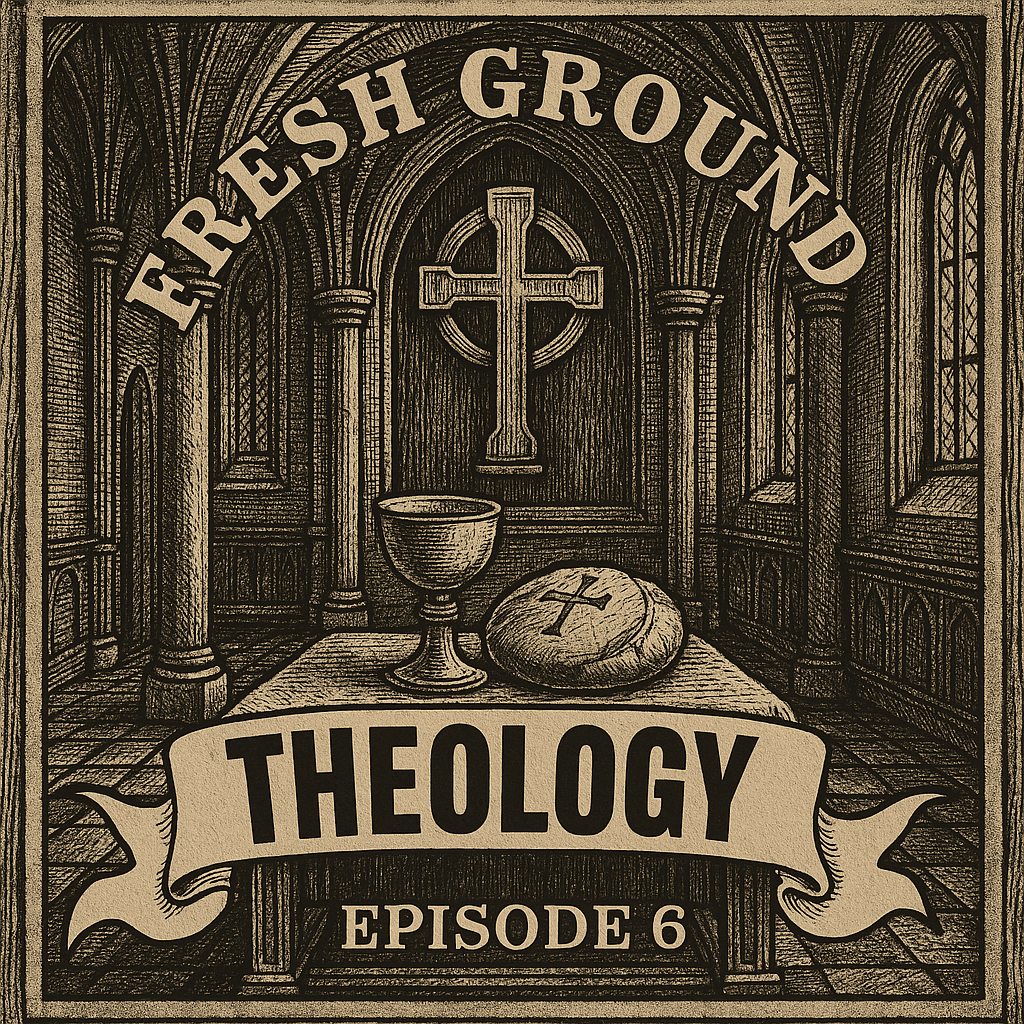
In this first episode of a new multi-part series, Nate and David begin their exploration of the Holy Eucharist—also known as communion or the Lord’s Supper—and the diverse Christian perspectives surrounding it. They clarify their aim: not to declare a single “right” view, but to present the theological landscape and encourage thoughtful engagement with the subject.
They walk through the roots of the practice in the Last Supper, unpacking the various names and meanings associated with the Eucharist—Eucharisteo, Communion, The Lord’s Supper, and Holy Communion. Drawing from church history and personal experiences, they survey the spectrum of theological interpretations:
- Transubstantiation (Catholic) – Bread and wine become the actual body and blood of Christ.
- Mystical Real Presence (Orthodox) – Christ is truly present, but how is a divine mystery.
- Sacramental Union (Lutheran) – Christ is present “in, with, and under” the elements.
- Spiritual Presence (Reformed) – Christ is spiritually present but not physically.
- Memorial View (Zwinglian) – Communion is purely symbolic, a remembrance.
The hosts share their thoughts on how these interpretations emerged historically, how Scripture and early church tradition support or challenge them, and how our views can shape—or divide—the Church.
They highlight key questions for further exploration:
- What did Jesus mean when He said, “This is my body”?
- How does Paul’s teaching in 1 Corinthians shape our understanding?
- Is Christ present physically, spiritually, or symbolically?
- What does it mean to participate in the Body of Christ?
- How has communion shaped (or divided) the Church?
- What role should the Eucharist play in the life and hope of the Christian?
They close by reading John 6:51–58, discussing the unsettling and provocative language Jesus uses about “eating his flesh and drinking his blood,” and what it may signify in terms of both symbolism and spiritual reality.
Theme: Unity through communion—how Christ invites believers to His table not just for remembrance, but participation and transformation.
Next Episode: A closer look at Paul’s theology of communion, especially 1 Corinthians 10, and how early Christian practices inform our modern liturgical (and non-liturgical) observances.
Find Us On:
Apple Podcasts | Spotify | www.freshgroundtheology.com
Connect with Us:
Have questions or want to share your story? Reach out via freshgroundtheology@gmail.com or visit www.freshgroundtheology.com.
 Fresh Ground Theology
Leave a comment