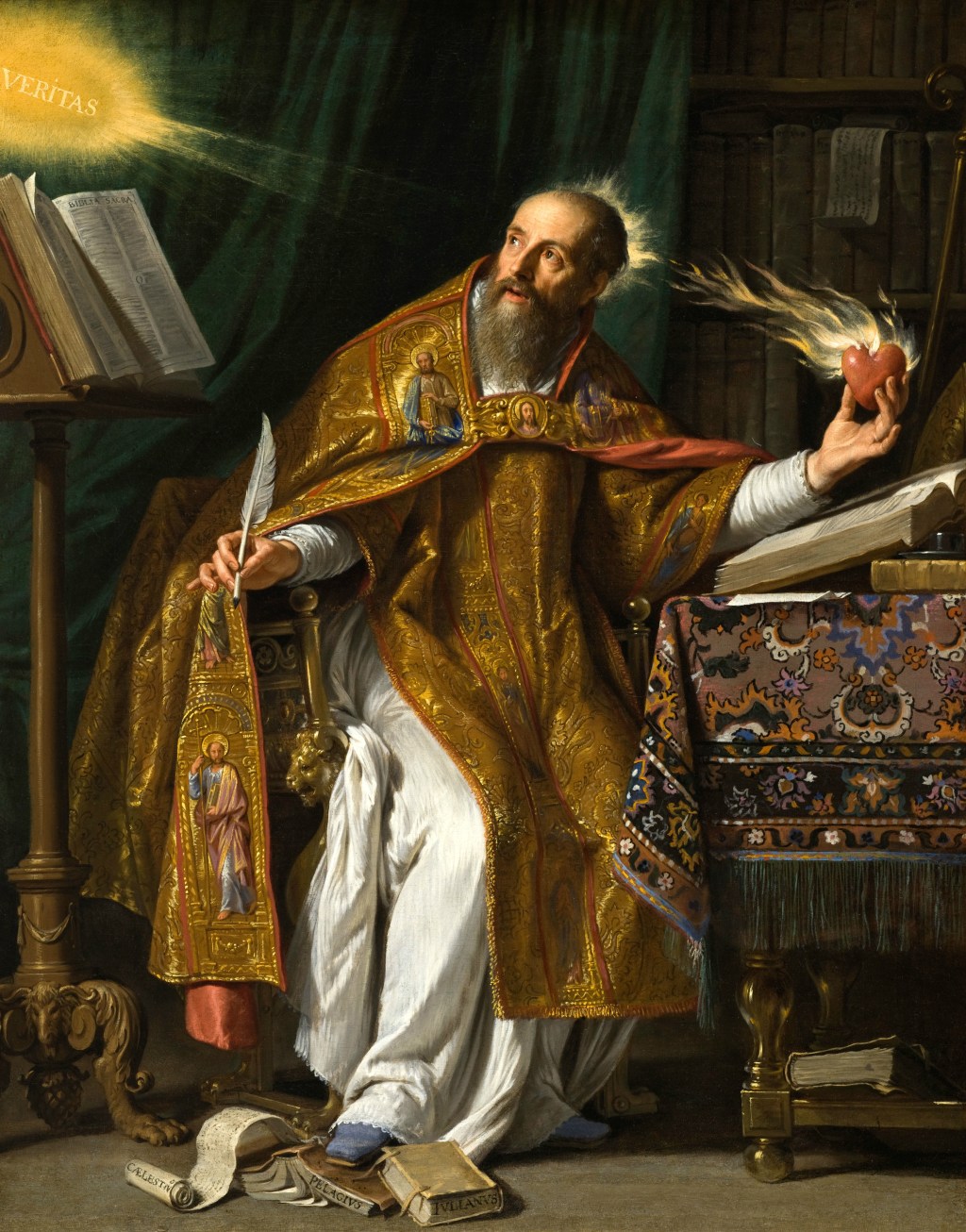
There are books that whisper wisdom and books that throw open cathedral doors. Augustine’s On Christian Doctrine—more accurately rendered On Christian Instruction—belongs to the latter. First completed in the early 5th century in the shadow of Rome’s decline, the work is neither a doctrinal treatise in the confessional sense, nor a summa of dogma to rival City of God. Instead, it is a quiet storm of intellectual rigor and pastoral burden, a how-to guide for those called not only to speak about God, but to do so faithfully, clearly, and beautifully.
To be sure, the English title can be misleading. This is not a book about the content of Christian doctrine, but rather the art of interpreting Scripture and proclaiming it well. In modern parlance, it is part hermeneutics, part homiletics, and part spiritual formation manual for the preacher himself. Written in four books over several years, On Christian Doctrine maps the terrain between divine revelation and human communication, between eternal truth and the fragile vessel of language.
Preface: Can the Spirit Be Taught?
Augustine begins with an apology—not in the modern sense of regret, but in the classical sense of a defense. He anticipates the objection that if the Holy Spirit is the true teacher, then what use is a human guide? To which he replies, with characteristic paradox: even those who know a language must be taught how to read. Scripture, he argues, is not self-evident. It is treasure buried in symbols, signs, and stories. And so, God has ordained that human interpreters should labor to understand—and then teach—what the Spirit has breathed.
Book I: Loving the Invisible
The first book is not about Scripture at all. It is about love. Specifically, the kind of love that must shape the interpreter if he is to handle the Word without distorting it.
Augustine draws a crucial distinction: there are things to be used and things to be enjoyed. To use something is to employ it as a means to an end; to enjoy something is to delight in it for its own sake. Only God, says Augustine, is to be enjoyed supremely. Everything else—including fellow human beings, angels, and even one’s own self—is to be used insofar as it leads the soul to God.
Here, Augustine is at his most Platonic and most pastoral. The preacher must not cling to temporal things. He must be purified, cleansed by faith, hope, and suffering. Only then can he rise to true love: not love for love’s sake, but for God’s sake. Christ, the Incarnate Wisdom, is the model and the means—He who descended into human frailty in order to lead us to eternal delight.
Augustine is not naïve about the human condition. Even when men harm themselves, he writes, they do so in the service of a deeper desire—pleasure, power, escape. The command to love God and neighbor includes a rightly ordered love of self. But this love, like a river, must be channeled upward, not pooled in the low places of idolatry.
The teacher of Scripture, then, must be a lover of God first and a lover of men second—not out of sentimentality, but because love is the truest guide to truth. To preach without love is to lose faith; to lose faith is to lose hope. But to grow in these, says Augustine, is to outgrow even the Scriptures—not in abandonment, but in embodiment. The mature Christian, shaped by the Word, becomes the Word’s living echo.
Book II: Signs and Shadows
If Book I was about the heart of the interpreter, Book II turns to the page. The challenge now is not merely to love rightly but to read rightly. For Scripture is not a collection of isolated truths but a mosaic of signs—words that point beyond themselves.
Augustine distinguishes between natural signs (like smoke indicating fire) and conventional signs (like words, gestures, or written symbols). The Scriptures are the latter: human signs designed to carry divine truth. But not all signs are equally clear. Some are obscure by design, to humble the reader and awaken his hunger. God, it seems, has hidden gold in the mountain, not strewn it in the street.
To navigate this terrain, Augustine urges the interpreter to cultivate seven virtues: fear of God, piety, knowledge, steadfastness, counsel, purity of heart, and wisdom. Above all, he must know the whole canon. Scripture interprets Scripture, and familiarity with its broad patterns guards against the kind of eccentric interpretations that lead not to Christ, but to confusion.
The interpreter must, as Augustine insists, memorize, meditate, and master the Bible—not just in content but in doctrine. The plain things are the main things, and these must shape how we read the ambiguous.
Book III: Ambiguity and Its Antidotes
Obscurity, Augustine notes, arises from two sources: the unknown and the ambiguous. Some signs are simply foreign—untranslated words, idioms, or cultural artifacts. Others are multivalent—metaphors that shimmer with possible meanings.
Here, Augustine offers a defense of translation and the comparative study of texts. A good translator captures the sense, not merely the syllables. A bad translation, by contrast, becomes its own form of misdirection. The wise interpreter will compare versions, consult native speakers, and allow clarity to emerge from comparison.
Augustine is no fundamentalist. He welcomes truth wherever it is found—even among the so-called pagans. Secular knowledge, he says, is not to be rejected outright but sorted, refined, and pressed into service. Logic, history, astronomy, music—all can clarify Scripture, provided they are held in humility. Truth is God’s wherever it is found; error is man’s, even when dressed in sacred robes.
The Sacred Burden
What emerges from these first two books is not merely a method but a moral vision. The preacher is not a pundit. He is a bridge-builder, standing between the text and the people, between the eternal Word and the chaos of the moment. He must love what he teaches. He must understand what he reads. And he must labor to speak not only with accuracy, but with beauty.
In Augustine’s view, Scripture is not a flat text but a forest—dense, symbolic, and alive. The faithful interpreter does not hack through it with a machete of certainty. He walks slowly, listening for echoes, tracing paths, and inviting others to follow.
In the second half of this work—Books III and IV—Augustine will turn from interpretation to proclamation. The task ahead is daunting. But the bishop of Hippo seems undeterred. Truth, he reminds us, is not merely to be studied. It is to be sung, shouted, and made flesh.
 Fresh Ground Theology
Leave a comment